Thursday, February 6, 2014

Time for a Selfie... (for ASPIRING writers)

"From the moment I picked up your book until I laid it down, I was convulsed with laughter. Some day I intend reading it."

- Groucho Marx, comedian and Genius (immortal)
Amazon Link


I often use the analogy of movies when talking about writing novels because they do have a number of things in common. This is yet another, although here there is a marked difference. Without a doubt this is possibly the most soul-destroying event any new writer will experience.


When making a movie, the Director will film many takes that will not end up in the final version of the film. These could be because the actors made a mistake, burst out laughing in the middle of filming, or simply because the Director just could not produce what he wanted. These days, this material is not lost on the Cutting-room floor when the Director and Film Editor put their heads together to create the final version of the movie, the one we will see in the theater. Usually these ‘outtakes’ appear as Extras on the DVD version of the movie, so at least the Director has the opportunity of placing more of their work before the viewing public.


Not so in the Writing world.


Once you have completed your First Draft, where, if you’ll recall, your sole objective is to transfer your story from your mind onto the page, the next step is polishing it. This is known as Hara Kiri Editing and there are several steps you should follow.


When you have literally, or mentally, typed ‘THE END’, a feeling of achievement, tempered with fear, will wash over you like a Tsunami. Yes, you can understand the achievement bit – it’s been a hard slog, but finally you are there – you have written a novel! 


No, sorry, you haven’t written a novel; you have written the first draft of a novel.


I said ‘fear’; why fear? Come on, search within and recognize that YOU KNOW you made compromises, especially as you neared the end; you know you CAN do better; you know there is room for improvement. Don’t be ashamed; we all do this, although many will not admit it.


As a creative writer, yes YOU, we now leave behind the pure abandon of fabricating something out of thin air and take a step to a hybrid situation where we will force ourselves to modify our creation while still trying to keep that freshness that abounded when we were pounding the keys. It’s a bit like Dr. Frankenstein deciding his monster would look better with blue eyes and less of a hooked nose…

Let’s take a look at the first part of the editing process, step by step.

The first step, as soon as you have finished you novel is:
  
GO DO SOMETHING ELSE!

You need a rest, a brief one, from what you have just written. I know the ‘just written’ bit refers to an extended period of time, months, maybe even years, but you have to distance yourself from your creation for a while and gain some perspective. It’s like a surgeon operating on a family member; unless you are objective, things are not going to go well!

But I’m finally a writer… I want to write, you say.

Fine, then write… something else. Try your hand at a short story, or an article, or a blog entry, or anything not related to your novel. It will still be there when you come back; don’t let impatience be your downfall after working so hard for so long.

After a couple of weeks you can pick up your story again and you may note your attitude towards it has subtly changed. It’s now easier for you to extract the scalpel and start cutting.

I know you have agonized over every word; battled the demons of randomness to memorize the Thesaurus and select the most suitable syllable to relay your ideas to your reader. But… you now have to make your book Lean and Mean!

Step two is a Selfie. No, I’m not suggesting you take a self-portrait for the back cover; I’m talking about a Self-Edit.

This is a multipart activity, as we will see.

First label the data file that is your novel ‘[title] FIRST DRAFT’ and make at least two copies of this, if you haven’t already done so, on pendrives and remove them from the vicinity of your computer. I’m a little Old-School too, so I always print out a full copy – What for? Read the chapter on Copyright and you’ll see. Then run the whole novel through your Word Processor’s Spell Checker. Okay, you’ve been doing this as you went along; fine, but do it again now. Make sure you have the right version of English selected (UK, US, whatever) and all the checking options switched on.

Done that? Document come back clean and approved?

Now read this:

I have a lovely spelling check
That came with my PC,
Witch plainly marks, four my revue,
Miss takes I can not sea.
I’ve run this poem threw the thing.
I’m sure your please too no.
It’s latter perfect in every weigh.
My checker tolled me sew.


Many years ago, an anonymous writer produced the above and it’s as true today as it was when it was first parsed through the spell checker – it comes out clean – no errors!

These are Homonyms and they are the bane of any Spell Checker. A Homonym can be at the same time a  Homograph (words that share the same spelling, regardless of their pronunciation) and a Homophone (words that share the same pronunciation, regardless of their spelling). There are a few obvious ones that will now be lurking in your novel: there and their and they’re; we’re and wear; for, four and fore to name but a few (phew?), but the list is long, believe me – Google ‘Homonyms’ and the Internet will provide you with a huge list. You could type these into the ‘Find’ field in your Word processor and check each one, but there are easier solutions, as we’ll (wheel, well?) see (sea?).

Just a minute. Didn’t you (ewe) say we should read through our work and catch stuff like that?

Yes, but…

Now read this…

Aoccdrnig to a rscheearch at Cmabrigde Uinervtisy, it deosn't mttaer in waht oredr the ltteers in a wrod are, the olny iprmoatnt tihng is taht the frist and lsat ltteers be at the rghit pclae. The rset can be a toatl mses and you can sitll raed it wouthit porbelm. Tihs is bcuseae the huamn mnid deos not raed ervey lteter by istlef, but the wrod as a wlohe.


No, this is not a joke; it’s a real study done a few years ago at Cambridge University which basically concluded that if you retain the first and last letters of any word in their correct position, and all the others are present, our brains can correctly interpret the sense in short paragraphs of text. There's an old joke by comedian Eric Morecambe about playing all the right notes, just not necessarily in the right order. It’s pattern recognition, which is how we read.

Okay, the spell-checker would catch all of those.

Then there’s this:
 Your memory will recognize the
the words and convince your
your brain it is reading what should
be on the page.


Nothing wrong with that, right? 


Look again. 


Still not spot it? Read it aloud.


So if we can’t trust the Word Processor or our own brains…

I’ve mentioned the existence of self-editing software before. This is not just a spell-checker on steroids, as so many are, offering little more than your Word spell check. It’s much more and a boon to writers of all levels. It’s easy to use and its job is twofold: 


a) enable you to do a Selfie far more diligently and effectively

b) improve how you write.


Check out Stylewriter (just click on the name to visit the site – there’s a FREE trial of the software too) as a perfect example of what I’m talking about. I thoroughly recommend it. Also the company that produces it not only have the editing software, but a really useful website to teach you, using videos, how to get the most out of it. There’s even a Writing Course. When using the software, remember to switch on all the options, especially things you may think are not necessary such as checking quoted text (dialogue) where you may deliberately break the rules.


This stage of the Selfie will take time; three or four FULL days at least for a full-length novel, as you examine everything reported (including Homonyms) and make changes as you go along. Save your document as ‘[title] FIRST DRAFT’ – yes, I know we already did that, but we are only just getting started. We won’t move on to the SECOND DRAFT until we finish the Selfie.

Don’t forget to update the security copies you made after every editing session, to!

Next, PRINT the whole thing out – single side, double-spaced with a wide (two inch, five centimeter, right-hand margin and an inch on the left) margin. Yes, I know you only want to produce an eBook… bear (bare?) with me.

Now the hard bit…

SWITCH OFF YOUR COMPUTER.


Hang on! Shouldn’t I be giving this to friends and family to read and check my novel for me?

Not yet.

Find a quiet room where maybe your furry foot-warmer can accompany you but where other family members, friends, visitors, Joe Public in general are banned!

Close the door, grab a pen or pencil, find a comfortable chair, turn to page one and…

read your novel ALOUD.

No, I don’t mean just move your lips… act it out!

Imagine you were reading it to an audience.

Read exactly what’s written, obeying all the punctuation marks (pausing for commas, semi and full colons, full stops/periods, ellipsis, etc; exclamation and interrogation marks should be treated accordingly too).

Dialogue should be read and infused with emotion – imagine your work is now a movie and you are hearing actors representing it on the screen.

Yes, you will find yourself saying “silly me; I’ve made a mistake there” (or shorter words conveying the same sentiment) and pausing to make use of the acreage in the margin – good, you’re getting the idea – don’t stop to rush to your computer to make the changes yet though. Work through the complete novel – it will take days, but it will give you a great sense of the rhythm and flow whilst drawing your attention to things you have forgotten to include (!) or stuff that needs cutting (!!) because it doesn’t add anything to the narrative. You may even change the order of events (!!!), even whole chapters (!!!!). You may decide to eliminate complete characters (!!!!!!).

I told you it was hard work, but comfort yourself with the knowledge that your novel will be all the better for this.

My very first draft of ‘2012’ (note use of lower case – I refer to the copy that was the input to the process described above) was 118,000 words in length; the published version was 88,000 words. Yes I did just say I chopped 30,000 words from that novel!

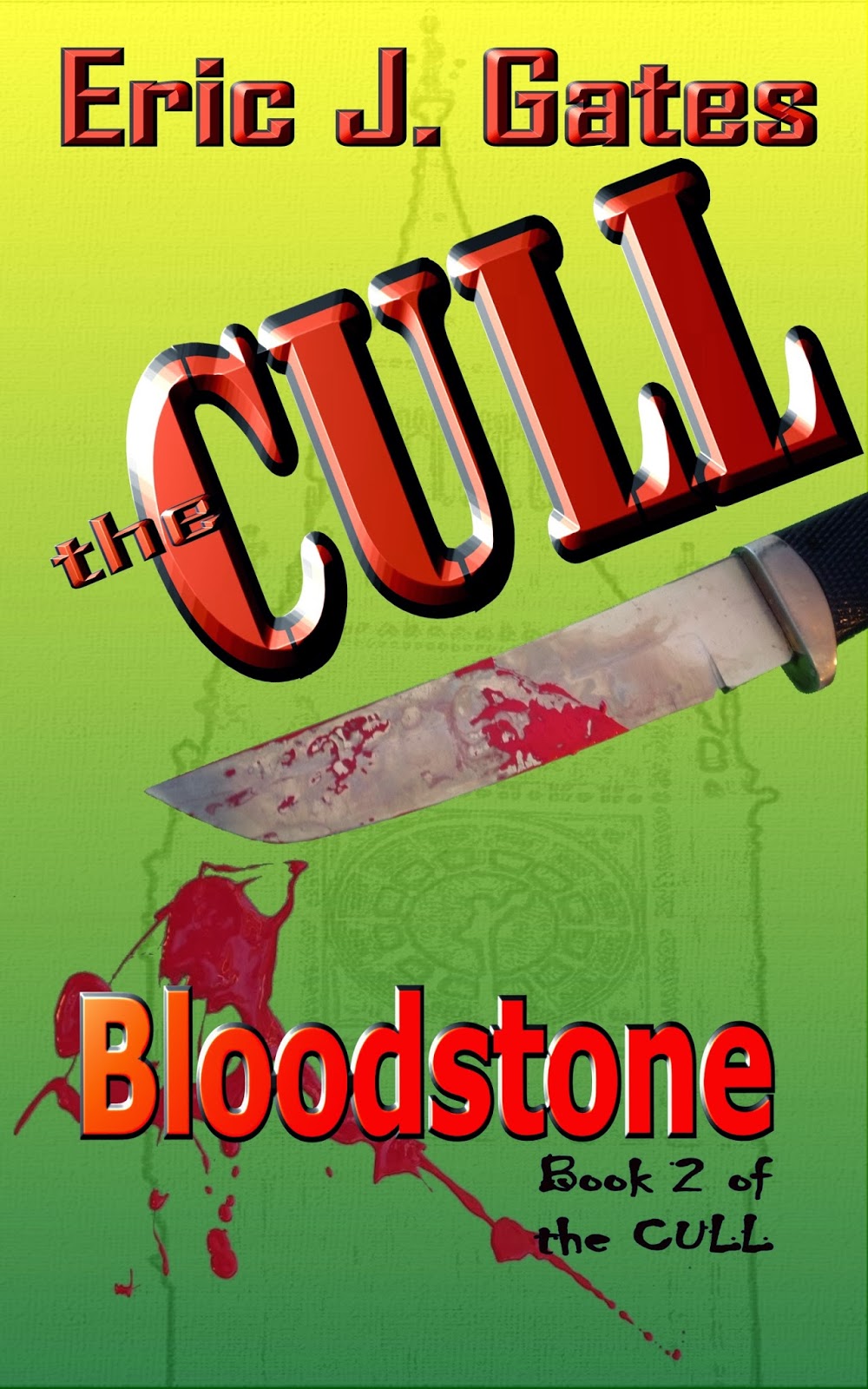
A trick I have for this stage of the Selfie is to use the right margin for making corrections (I always choose a contrasting ink color that’s easy to spot against the black ink on the page), underline the text where the correction needs to be applied, and then put a large X in the left-hand margin at the start of the line. I also fold down the top left-hand corner of any pages that have any corrections to make them easy to locate. You will probably find that most pages will end up like this; at this stage in ‘the CULL – Bloodstone’ only four pages out of the complete novel did not have bent corners, and one of those said ‘THE END’!

Finally, if you haven’t been carted off to a mental institution at the behest of worried family members after hearing you talk to yourself for days on end in a locked room, you are ready for the next bit of the Selfie.


BACK TO THE BATCAVE!


Apply all the changes. When you finish each chapter, save it (backup copies as well) and go back and read it aloud again, this time not only checking you haven’t missed anything, but evaluating the PACE of what you’ve written. Try to be as objective as possible, and ensure you are judging ONLY the Pace. Try to isolate your assessment so it doesn’t take into account preceding or following chapters (you have an unfair advantage over your readers in that you know what’s coming, remember).  

When you have finished, run the whole beastie through the self-editing software again. Then, and only then, you can change the resultant document’s name to ‘[title] SECOND DRAFT’.

If you are doing this right, you are getting pretty bored with your book by now. That’s a GOOD sign. Soldier on; we’re getting there.

Now, if you wish, you can post your work on review sites or have friends, Romans and countrymen Beta read the creation.

Finished, right? Just need to see what the amigos think of your masterpiece. Only a question of waiting now…


Sorry. Now’s the time to get the Professionals involved...


The above was extracted from the chapter on Editing in 'How NOT to be an ASPIRING Writer' by yours truly. It's aimed at anyone who's new to this writing business and, using a witty, chatty style, I will walk you through the minefield that is the new publishing paradigm; from how to turn an idea into a story to using Social Media and all the interesting stuff in between.

If you want to lose that 'aspiring' word or simply become better at writing fiction (any genre) then this is for you.


NEWSFLASH

NOW on Kindle COUNTDOWN (where applicable)

Starting at 0.99 from 6th Feb creeping up to 2.99 before returning to full price on 12th Feb.

Get your copy NOW while it's on SALE.

Your Amazon Link


Eric @ www.ericjgates.com


Thursday, January 30, 2014

Discoverability - an issue affecting all

Usually on these pages I feature a post from a Guest Writer, and this week it's a little different. Friend and fellow scribe Laurence O'Bryan has gone proactive in tackling an issue that affects all authors - letting readers know you and your books exist. Here's what he has to say:


There are a thousand and one book promotion sites.

I opened BooksGoSocial.com to the public this month to provide a site for authors, which focuses on their novels. Their actual novels. 

I created the site to share my good fortune too. I have 198,453 followers on various Twitter and other accounts. And my novels are published in 11 languages.

One account alone @LPOBryan has 53, 406 real followers. I won’t bore you with a list of the others. You can email me: lpobryan@gmail.com if you have any questions.

The benefits to writers and publishers of having their books on the site are:


1. To be displayed prominently alongside other credible writers. You can refer people to the page that will be created for you. It will have the cover, first page and a link to Amazon for whatever novel or novels you wish to put up.

2. You will also be listed on the associated mobile site and App.

3. The sites and your page will be promoted to a following of hundreds of thousands of readers every day. Competitions will be run each quarter to attract more readers and book buyers.

4. To have access to a support service with options on Amazon review gathering, website and social media advice. 

5. You will also receive a guide to social media rated highly on Amazon.


There will be no author photos and no discrimination on BooksGoSocial.com. Discoverability is the buzz word that’s on the lips of all the publishing industry people in London and New York. But they don’t own all the channels any more. Authors can now be discovered directly by readers, through the power of a web site and a network of supporters all helping to promote that site.

BooksGoSocial.com is a site based in Ireland, the home of influential writing. It’s supported by great writers and great writing sites around the world already and is open to any author, in any country writing in English. It will evolve too. For now we don’t have genre categories, but they are coming, as is a way for authors to promote their first pages on the site quickly and easily.

It will have new novels every Sunday. So come back again and again if you are looking for good books to read.

If you are an author or publisher and you want to reach a huge international audience, 50% U.S. based, 30% U.K. based and 10% based in Ireland, then get involved. Those 200,000 followers have a reach of 20 million, based only on each of them having a hundred followers. That’s the potential of social media. If you have something powerful to offer, a great story, it needs to be on this site.

BooksGoSocial.com will feature quarterly eReader give away competitions to attract readers, credible authors and great writing.

That’s what we want to focus on. The writing. Reviews and rankings won’t be front and centre, nor will lists of other books people bought. The site has a simple layout, which encourages busy people to read a first page, and then to click through and buy the book.

Don’t miss out. Get involved. Support great writing. Visit BooksGoSocial.com

Laurence O’Bryan
Author & Founder
BooksGoSocial.com

Wednesday, January 15, 2014

My Guest: Joanne Wadsworth

My Guest this week is a writer whose ability to keep three distinct series on the go is inspiring. Today she has a look at a topic many readers are discussing. Ladies and Gentlemen...


Joanne Wadsworth


Ebooks or Paperback? 

What’s your Preference?


Amazon Link


Just recently I was thrilled to be interviewed by the editor of my regional newspaper, and she asked a very intriguing question. “As a writer, what was my preference? Ebooks or paperback?” When I answered ebooks, she then asked, “Where did I see the future with them?”

I actually live in New Zealand, and we’re a little behind the rest of the world with ereaders. Seriously, we are. I’d say we’re even lagging by about three years. So many here don’t understand how great ebooks are. Being able to buy and instantly download, and at a fraction of the cost of a paperback means time and money saved. When I’m asked by someone on the street where they can buy my books, and I say they’re ebooks, half the time they frown and say, “I’ve heard of ebooks, but I want a real book that I can feel and touch.” Now they’re not saying this in a mean way, but they just don’t understand.

Amazon Link
Sure, I enjoy holding a paperback and turning those crisp pages, and I still buy paperbacks from time to time. Particularly from my favorite authors where I know I’ll want to mark up pages which inspire me. But buying a paperback book is becoming rare for me. So what to tell the editor, where did I see the future of them? Particularly when I knew half the people reading the article would be of the same mind as those I meet on the street. Thankfully, it came to me in a flash of inspiration. Phew.

“You only have to look around you to see the advances in technology and it becomes clear where ebooks sit in the future. In preschool our under-fives use digital devices. They play fun software games which teach them math, English and so much more, but right along with those games they’re reading ebooks. Our school-aged children read ebooks on their ipads, smart phones, laptops, tablets and of course ereaders. We’re teaching our young ones to read in a new way. They’ll bring
Amazon Link
what they know and enjoy with them into the future.”

It was then I realized the depth behind my answer. What is going to happen to paperback in the future as the demand for ebooks grow? Oh boy, will paperback even be able to maintain a foothold on the market?

I’m reminded of when I was a child and of how technology has changed. My mother had an old washing machine with a manual wringer. We wouldn’t even consider holding onto one of those now. What for when with the press of a button today’s washing machines do it all. We could all name hundreds of new inventions which have surpassed the old. So, what will happen to paperback in ten, twenty, thirty years’ time? 

If you’re reading this, what are your thoughts? 

Do you think they’ll still be here? The atlas? Those beautiful photography books? Books of all genres? It’s a little scary to think of paperback becoming rare.

Drop me a comment and tell me what you think? And what’s your preference? Ebook or paperback? I’d love to hear.


And in light of all this talk of technology, take a look at this funny picture I just had to share.


LOL. Fabulous, and I bet the child totally got it. 
BIO:

Where Romance Meets Fantasy and Adventure…


Reading romance books captivated Joanne Wadsworth as a teenager, particularly when she tucked herself into bed at night and continued to dream those stories as she slept. She'd visualize the direction, taking the hero and heroine on an adventure unparalleled to what she'd read. Today she is devoted to writing romance, bringing her imagination to life within the lines of young adult, contemporary, and historical Highlander.

Born in New Zealand, Joanne works both as a writer and a financial controller, all while keeping up with her four energetic children and dreamy husband.


When she's not writing her three series Joanne can be located at:

GOODREADS

Thank you, Joanne, for an interesting article. I confess, until recently I was a paper-book-in-hand person but now I have a Kindle, I suppose I'll adopt both. The inexorable march of progress!

Eric @ www.ericjgates.com

Thursday, January 2, 2014

A New Year's Resolution for READERS!


Reading.

When you are asked about your hobbies and pastimes and list this amongst them, people still look at you askance. 

Why? 

It’s so passive, Dude! You know; you just sit there and turn pages, hardly any effort involved. Even less if it’s an e-book. Hey, forget that! Come do some Hang Gliding/off-road driving/downhill skiing – live a more adventurous life – experience, Dude!

And they are right.

But not why you think.

We readers of the World, we billions of readers, are too set in our ways.

Reading is a passive activity – yes, in that we don’t move a lot – physically, that is. Yet there are very few pursuits available to everyone that can take your mind to places that stir emotions, allow involvement in life-threatening pursuits, introduce you to memorable people and places that will change your whole outlook on life, that allow you to live outside your boundaries… and with NO RISK.

Vertigo, as you scale the sheer rock face alongside the hero? Just put the book down.

Anxious, as you see the speeding train near and the chains tying you to the track won’t budge? Just put the book down.

Trembling, as the assassin’s blade nears the throat of your beloved heroine? Just put the book down.

It’s controlled madness!

And there’s a whole bunch of writers out there finding new ways to make our senses tingle every minute of every day.

Excitement. Danger. Exotic places. Evil villains. Exceptional heroes. Mind-blowing tales.

So why do we insist on reading only in our comfort zones?

“I like police thrillers, so that’s all I read”
“Me, I only read paranormal stuff with vampires.”
“I like a good suspense novel. I just read these two or three authors”

And so on…
What a boring life!

Look, you have no risk. Just put the book down. Try something outside your comfort zone. Just be a little adventurous… find something NEW!

Remember this:

Once upon a time, not that long ago, J. K. Rowling, Dan Brown, and even James Patterson, were unknowns. Someone discovered their books and experienced a sensorial thrill from their prose long before people bought their works just for the author name (it’s a XXXXXX XXXXXXX so it must be good!)

Experiment and discover the new Indie authors out there and the fresh air they are bringing to your favourite genres. It’s like that moment when someone thought to put a twist of lemon into sparkling water!

So make a NEW YEAR's RESOLUTION:

Read outside your comfort zone!

This message has been brought to you by Eric J. Gates, author of a vampire novel where the creatures DON’T have fangs! And they’re Irish! What, how dare he! 


Eric @ www.ericjgates.com

Thursday, December 19, 2013

My Guest: Eric J. Gates

My Guest this week is... Me! Well, I've not been on here for a while and I'm a cheap date, so without further ado...


Eric J. Gates


A stake in the Vampire Meme


Many years ago, shortly after dinosaurs evolved into birds, there was a comedy show on BBC radio called ‘I’m Sorry I’ll Read That Again’, and yours truly was a fan. (I told you I was old, very old and needed blood… sorry, got carried away there). Where was I? Oh yes, the radio (that’s TV without the sound, for the younger people reading this). The program was a precursor to Monty Python and several of that crowd actively took part in its weekly broadcasts, so you can imagine the kind of show it was. I have many fond memories from that program, but one comes to mind now. It was almost a social experiment; perhaps well before its time. It was proposed that anything could become funny if it were repeated often enough. To illustrate the point, the cast chose the word ‘teapot’ and proceeded to introduce it at inopportune moments throughout the half hour of the program’s duration. Yes, you’ve guessed it, by the middle of the show, it was hilarious.
Amazon Link
So, what’s all that got to do with the price of tea in China?

I have just published Book 2 of ‘the CULL’, my (s)take on the vampire myth, and I was musing, as I am wont to do, on how far from its origins this particular lore has become.

Just a minute, you say, everyone knows Abraham ‘Bram’ Stoker invented vampires, right?

Wrong!

Teapot!

And that’s just what I mean. Thanks to incessant, uninformed repetition, we now have a meme that equates Stoker’s Dracula with vampires. Yet it couldn’t be more misleading.

Long before Stoker published his book in 1897, or John Polidori published ‘the Vampyre” in 1819, based itself on Lord Byron’s “Fragment of a Novel” published in the same year, myth’s about blood-sucking creatures abounded, and not just in Eastern Europe. Yes, you might say, everyone knows that Bram Stoker was inspired by Vlad Tepes, the Transylvanian Prince who impaled his victims on stakes.

Amazon Link
Or was he?

Teapot!

Bram Stoker grew up in Dublin. Twenty-two years before he wrote ‘Dracula’, he may have read a book, popular at the time, called the ‘The Origin and History of Irish Names of Places’ published in 1875 by Patrick Weston Joyce, which cites the story of Abhartach, originally featured in Geoffrey Keating’s 1626 account of Irish folklore. Abhartach was an Irish King who is deposed, and killed, because of his barbarous behaviour. His corpse was left to rot in a shallow grave. The tale tells of how he resurrects and seeks the blood of his treacherous subjects, and how, eventually, a local druid tells the townspeople to rebury the body face down, with a wooden spike driven through it, to hold it in place, and a huge boulder placed on the grave to impede a new walkabout.

A bit extreme, you might think. This custom was prevalent at the time, not just in Ireland, but also throughout most of Europe, and the measures taken were meant to stop the body reviving and exiting the grave to seek redress from those that had harmed them in life. The Roman Catholic Church, the same people who brought us the ever-popular Inquisition, was a prime promoter of these methods – if you contrast known digs of buried ‘vampires’ you will quickly discover their burial coincides with the expanse of Catholicism in the area.

Teapot!

But back to Stoker.

Amazon Link
In 1880, seventeen years B.D. (Before Dracula) there was an exhibition in Dublin featuring Keating’s work. An exhibition in Stoker’s home town, and only a few years before he wrote the novel – an interesting coincidence? What’s more interesting is that in Keating’s book, and in the exhibition, these creatures are given the Gaelic name of ‘Dreach-Fhoula’, meaning 'tainted blood' and which is pronounced Droc’ola. So you can see where Stoker may have got his ideas.

But it doesn’t stop there…

Teapot!

Brammy (I feel we are almost friends by now) is said to have been inspired to write his famous novel, one of a total of twelve as well as several books of short stories, he penned during his life, when he saw Slains Castle in Aberdeenshire, Scotland. He had been staying at nearby Cruden Bay in 1895, and Slains Castle is said to have become, by the magic of his pen, the home of Count Dracula. If you peruse the description of said home at the end of Chapter 1 and start of Chapter 2, you will see a remarkably accurate description of what could easily be said Scottish abode.

So where the Dickens did all this Transylvanian nonsense come from?

Just cast your mind back to the Victorian Era in the British Isles. Go on, I dare you! There was no Internet, no TV full of reality programming and travel documentaries, and no aircraft to pop over to sunnier climes. What! you say. The novels and periodicals of the time were the major source of news about exotic places and the authors of that period were well aware of this. It helped ensure their popularity amongst their readers if they set their books in such ‘unknown’ territories. Look who else was popular at the time: Rudyard Kipling, Jules Verne, Robert Louis Stevenson, H. G. Wells, to name but a few, provided colourful relief to the more socially critical fare of Charles Dickens, the Brontës and Oscar Wilde. Apparently Brammy, who never journeyed to Eastern Europe, met Hungarian writer, incorrigible traveller and Turkologist (yes, such a word exists!) Ármin Vámbéry, who provided ample information on Transylvanian culture.

Inspiration is where you find it!

Imagine, for a moment, if the opening chapters of Stoker’s novel had been set in Scotland or his native Ireland.

So, I leave you with that thought.

And this one…

Teapot!    

And before you ask, that's not a stake in the photo; it's a japanese katana sword which I use to lop the heads off werewolves... but that's another story.

Postscript: In my vampire trilogy, I’ve gone back to the roots. They're from Ireland, don’t have fangs, use mirrors without problem, and don’t have a fear of crosses... just those who wield them! Extreme Reading, for those who are looking for a change from teenage angst, too.

Bio:
Eric J. Gates has had a curious life filled with the stuff of thriller novels. Writing Operating Systems for Supercomputers, cracking cryptographic codes under extreme pressure using only paper and pen and teaching Cyberwarfare to spies are just a few of the moments he’s willing to recall. He is an ex-International Management Consultant who has travelled extensively worldwide, speaks several languages, and has had articles and papers published in technical magazines in six different countries, as well as radio and TV spots. His specialty, Information Technology Security, has brought him into contact with the Military and Intelligence communities on numerous occasions.

He is also an expert martial artist, holding 14 black belt degrees in distinct disciplines. He has taught his skills to Police and Military personnel, as well as to the public.


He is the author of several thriller novels, details of which can be found on his web, and collaborates with other authors and Writer Networks.
Author website: www.ericjgates.com
Blog: you're reading it - have a look at the posts by all the wonderful Guests who have passed through here, while you're at it.
Twitter: eThrillerWriter

Thank you, me, for an informative post about vampires
...and teapots. 

A very Merry Christmas to all!

Eric @ www.ericjgates.com

Wednesday, December 4, 2013

My Guest: John Dolan

Avast, me Hearties! My Guest this week has just crossed swords with a writer's worst nightmare... and WON! I'll let him tell you about it. Ladies and Gentlemen, I give you...


John Dolan


YO HO HO and a bottle of Rheum


Ok, so here’s the thing. You’re a self-published author. You’ve planned out and written your book (or you just started writing without a plan and somehow got it finished anyway). You’ve read it and re-read it
Amazon Link
until your eyes bleed, done some editing, fine-tuning, whatever. 

Maybe you’ve employed a professional editor, run it past beta-readers, let your mum see it. 

It’s been formatted for ebook publication and as a hardback/paperback. Somebody (perhaps you or maybe your mum) has designed a cover. 

You’ve checked the proof copy and tweaked as necessary. You’ve planned the launch and executed it impeccably using a combination of social networks, advertising, book signings. 

You’re either working your way through your marketing plan systematically or making it up as you go along. But whichever route you’ve chosen, you’re working your butt off.

Amazon Link
Other than getting the next book written and continuing to promote your book – which includes blogging, tweeting, interacting/co-operating with other writers etc etc – there’s nothing more to do, right?

Wrong!

There’s something else you need to worry about.

Pirates!

Unless you plan to give away all your writings free and you don’t care to know how many people have downloaded copies, you need to think about pirates. And I’m not talking about the cuddly, Johnny Depp style of pirate either. I’m talking about the ones who will copy your work and offer it free (when you’re charging for it) or sell it themselves (and you get no royalties).

The first problem you have is actually finding out that someone is selling or giving away your book without your permission.

A few weeks ago I Googled my novel ‘Everyone Burns’. For the first few Google search pages, everything was well. The web addresses were as I expected them to be. Then a website popped up for some organization called Atabal Books who were offering my novel as a free download in all common file formats. Interesting, as my book is sold exclusively through Amazon and retails for $3.99.

   
Amazon Link
So what do you do next? Well, you could do a lot worse than reading this article:

http://www.sfwa.org/2013/03/the-dmca-takedown-notice-demystified/

In summary, find out who is hosting the offending website and serve them with a DMCA Takedown Notice (an appropriately-worded e-mail will do). Strictly speaking, this notice is only effective for USA-based hosting companies, but there are many international companies who are reputable organisations and do not want to be seen to be hosting copyright-theft sites. The company hosting Atabal Books, is in fact NOT USA-based but on receiving my email they REMOVED the Atabal Books site within six hours. Impressive, eh?

Lessons learned:-
  1.  Read the article in the link above, and bookmark it for future use 
  2. Google your book from time to time to see if anyone is doing anything naughty with it 
  3. If you discover a pirate, find out who is hosting them and send them a DMCA Takedown Notice (even if they are not US-based). Tweet me @JohnDolanAuthor if you want a sample Notice
  4.  Follow up and shame the host by whatever legal means are at your disposal. Threatening to summarily execute members of their family is probably not a good idea
  5. Smile while doing all of the above.

Bio:

"Makes a living by travelling, talking a lot and sometimes writing stuff down. Galericulate author, polymath and occasional smarty-pants."

John Dolan hails from a small town in the North-East of England. Before turning to writing, his career encompassed law and finance. He has run businesses in Europe, South and Central America, Africa and Asia. He and his wife Fiona currently divide their time between the UK and Thailand.

When not writing, John can be located at:


Thank you, John, for a very interesting and useful article. Hope you've sunk 'em for good!


Thursday, November 28, 2013

My Guest: Seumas Gallacher

He's back! Yes, That Man is back! (cue massed bagpipes soundtrack). This time talking about violence in novels. Ladies and Gentlemen...


Seumas Gallacher


Bluddy Savage


…I wonder how often and how many of yeez have the same thoughts that bang around in my little grey cells from time to time… today’s epiphany jumped in a wee while ago… ‘…God save us from those that want to save us from ourselves…’ …it starts when ye’re still an infant, still in yer short trousers… the ‘savers’ raise the alarm about how much violence gets peddled in the movie theatre cartoons… ‘…it’ll warp their minds… create
Amazon Link
monsters out of them… psychologically damage them forever…’
…well, I don’t know about how yeez all handled that stuff, but watching the likes of Tom and Jerry and the Road Racer invent thirty thousand different ways of bodily annihilation never ever put me off my mince… fast forward to the modern day and the birth of the eBook phenomenon… everybody and his cat wants to write a novel… the favourite literary poison of the day is crime thrillers… which generally means violence and killing on a scale seldom seen outside of World Wars… with the flick of a quill or a tap on a laptop keyboard, victims pile up for the bin men to collect… my ol’ Mama said yeez can never get enough of a good thing… but from a scribbler’s perspective, just how much violence is a ‘good thing’?… the writing clichés abound on how to make characters become ex-persons… all the way from size 10 concrete footwear to ‘pluggin’ ‘em’ with three kilos of best cordite-smellin’ lead… ‘fess up time… I’m a crime thriller author… and, yes, there’s more than a tad of violence in my masterpieces…(I’m from docklands Govan in Glasgow, what do yeez expect?)… however, there’s a huge difference in the novelist’s use or abuse of violence… (… ‘gentle’ violence? …surely not?)… readers are not dumb… okay, they’re well-adjusted to the concept of ‘suspending disbelief’ in the interests of story
Amazon Link
plot flows… but we’re not talking horror genre here… so creating gallons and gallons of gore doesn’t make for good crime stories… neither does a mild tap on the back of the skull to induce corpses… yeez have to keep it real and credible… most authors will tell yeez that they’d like to have a ‘grab-‘em-by–the–throat-and-pull-‘em-in’ beginning… violence is fair game for that… startle ‘em a wee bit… but there’s the risk of ‘over-selling’ it… once yer character’s dead, leave him dead… don’t overkill him… if ye’re trying to provide descriptive evidence that a bad dude or dude-ess is really bad, he or she doesn’t have to strangle somebody to show that… a well-placed sneer fits the bill just as well… once a reader has made an early judgment on the evil protagonist, it sticks, don’t worry about that… instead, use the impending threat of violence as the tension-builder… oh, and by the way, if the baddies get taken out on the ‘live by the sword, die by the sword’ ethos, then it’s perfectly acceptable to visit every kind of savagery on them… the only baddies I ever consistently rooted for back in the old days was whatever criminal characters Jimmy Cagney or Edward G. Robinson portrayed… but by and large, yer readers want the villains to ‘get theirs’… some writers create havoc in the body count and violence while others get by with perhaps a single mortality… it depends on the story context… just don’t make any of it gratuitously violent… there has to be a purpose, even if it’s merely retribution by
Amazon Link
killing the bad guy, or sculpting sympathy for the killing of an innocent character… it has to resonate with the reader… evoke some reaction… yeez don’t want the reader to actually feel pain, but it’s good writing to have them feel the emotional pain of the those close to a ‘goodie’ ye’ve just topped… and nothing beats the reader’s inner cheer when the ‘baddie’ finally gets huge dollops of his own violent medicine… yeez want them saying, ‘…Yes! Yes! Got the s-o-b…’ …by the way, counterbalancing the violence with some ‘touchy-feely’ emotional passages is not only acceptable, but desirable… in the absence of outright humour, a lighter piece gives the reader a breathing space… lets them catch their second wind… believe me, they’ll be grateful and thank yeez for it… so, with all that in mind, go kill ‘em!…


Brief Synopsis of Seumas' latest thriller Savage Payback - the third of the Jack Calder novels:

A series of coordinated lethal bomb attacks on a dozen jewelry stores in London’s West End drag former SAS officer, Jack Calder and his specialist security firm, International Security Partners, into a deadly mesh of murder and international drug running.

A black ops explosives expert, an ex-colleague turned renegade mercenary with a twisted lust for revenge, emerges from the past to join forces with a powerful and dangerous drug baron from Eastern Europe. A major cocaine trafficker from South America compounds the threats as competitive turf issues straddle international territories.

Attacks close to home heighten the urgency for Calder and his team to find and deal with each of the three sinister adversaries in a final savage payback.


Bio

Seumas Gallacher was born in the cradle of the Govan shipyards in Glasgow in the so-called "bad old days" which were in reality the greatest of days, where everybody was a real character of note.

An early career as a trainee Scottish banker led to a spell in London, where his pretence to be a missionary converting the English locals fell on deaf ears. Escape to the Far East in 1980 opened up access to cultures and societies on a global scale, eventually bringing the realisation that the world is quite simply one large extended village.

The lifelong desire to write resulted in "The Violin Man's Legacy", the first in the Jack Calder series of crime thrillers. Seumas says that finishing that novel was one of the best feelings he has ever experienced in a life full of rich emotions.

When he's not writing the next installment in the Jack Calder series, Seumas can be found here:

Blog:              http.www.seumasgallacher.wordpress.com
Twitter:          https://twitter.com/seumasgallacher
Email:            seumasgallacher@yahoo.com


Thank you, Seumas, for an interesting insight into the use of violence as a writer's tool in fiction.


Eric @  www.ericjgates.com

Wednesday, November 6, 2013

My Guest: Regina Puckett

My Guest this week is an authoress who has mastered a challenge so many writers choose to avoid. Her thoughts on using different genres to tell your stories, and why she enjoys this approach, are the subjects of this interesting post. Ladies and Gentlemen, I present to you...


Regina Puckett


The Horror of Romance


People look at me like I’m a two-headed snake in a freak show whenever I tell them my books and short stories aren’t all written in the same genre. I write romance, horror, inspirational, children’s picture books and my newest venture is erotic/horror. Yes, I really did just say erotic/horror. The later genre I co-authored with my daughter, Charity Parkerson. I left the steamy scenes to her while I stuck to mutilating and killing people.

Amazon Link
The truth is I’m really not certain why there aren’t more authors choosing to write in multi-genres. I know I have several stories in my head still waiting to be written and they don’t all fit into the same mold. I wouldn’t think I was that different from any other author. In my opinion, a good story is a good story no matter what the genre is. Besides, I like changing things up every now and then. It keeps things interesting. I enjoy writing about people falling in love, but it’s just as much fun to find a creative way to kill someone.

Right now you’re out there questioning my sanity. That’s okay. You wouldn’t be the first person to do so. And, yes, I do understand the whole theory behind branding myself as a writer, but while that may work for traditional publishing houses, does that same idea work for indie authors? Without having the powerful machinery of publishing houses behind us, I truly believe, indie authors need to be more creative and should always be willing to try something new.

Amazon Link
I like being able to appeal to a wider spectrum of readers. But even after saying that, that’s not the only reason I write in so many different genres. I write the stories that insist on being written and I never know who or what will inspire my next tale. Will Work for Food was written after seeing a beggar on the street corner. Paying the Hitchhiker came to me as I was riding with my husband from Tennessee to Myrtle Beach. I wrote Concealed in My Heart because of a dream. Every single one of my short stories and books were inspired by something different. I have accepted the fact that my mind has a mind of its own.

It seems that with the aging process, more and more of my stories are turning into tales of horror. Maybe it’s because I’m turning into a cranky old bitch in my old age. While I still do believe in love at first sight, I also can think of a hundred different ways to kill someone and bury the body. I’m probably better off not overanalyzing what dark paths my mind is willing to travel down on most days. Writing is a great way of breaking the law without really breaking the law. Just because you don’t see your name in any of my books doesn’t mean that wasn’t YOU I killed in my latest horror story. I do like killing people who have ticked me off. So think carefully, have you done something lately to piss me off?

Amazon Link
So my question still stands, why shouldn’t I write any story I want to? As a reader, my interests have always been wide and varied. I love reading romances, mysteries, horror, Science Fiction and last but not least the back of milk cartons. The written word should always be appreciated. Since someone, somewhere took the time to write it, the very least we can do is take the time to read it.

I’m not a famous author, so it’s probably bad form to be offering advice to anyone on how to advance their writing career. My professional advice is to take everything I say with a grain of salt. The truth is there is no magic bullet for making it as a writer. I have no idea why some excellent writers never make it big, while a few terrible ones become bestselling authors. Maybe it’s the luck of the draw or just maybe, even though they aren’t excellent wordsmiths, they are great storytellers.

What I’m trying to say is don’t be afraid to try something new. You might just discover the writer you were truly meant to be.


Bio:

Regina lives in Tennessee. She has been a writer for as long as she can remember. The only way she knows to shut the voices up is to tell their stories and to let them live among the pages of her books.

She loves writing in many different genres because life is too short to be stuck in a rut.


Thank you, Regina for a great post. It occurs to me that a reader following a particular author could also discover new genres if that writer is multi-genre too.

Eric @ www.ericjgates.com